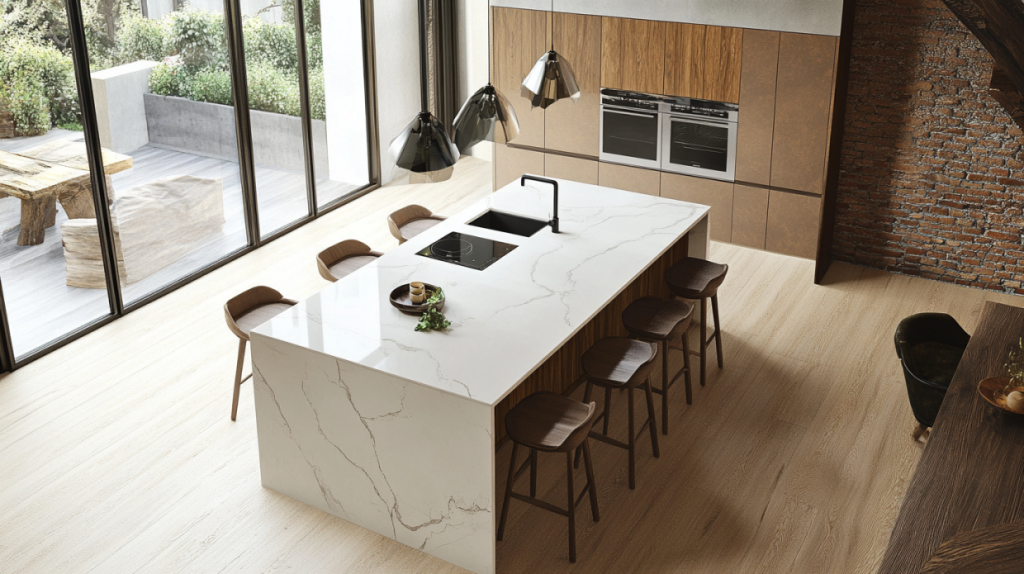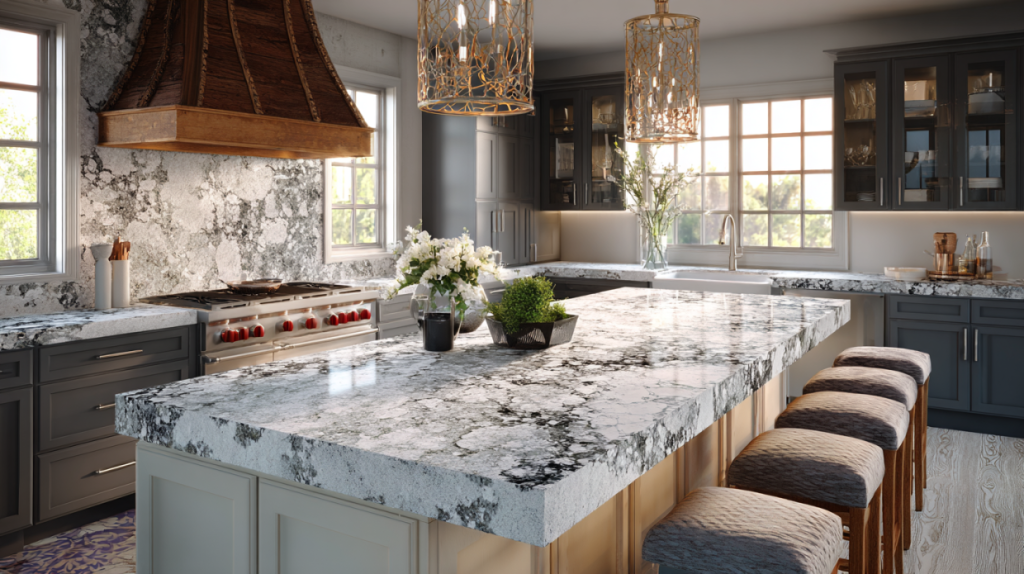


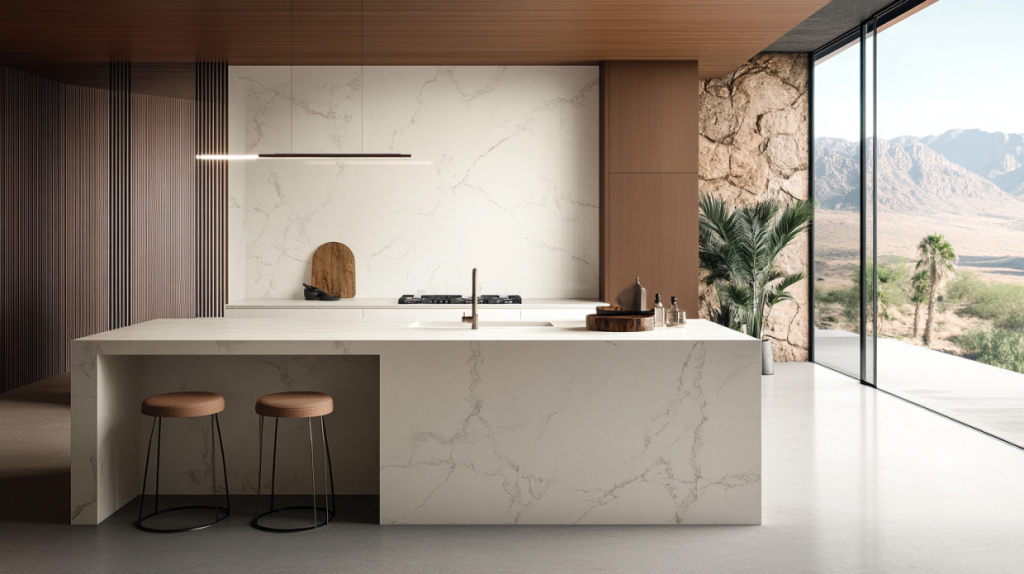

Silestone – Faro White | Installed Quartz Countertops | Suede Finish Available | 3.0cm Thickness Options
- Aesthetic Description: Enhance and brighten any design with the dazzling beauty of this pure white stone. Its chic simplicity allows for unmatched versatility across all styles and spaces.
- Suitable Applications: Indoor Surfaces Only
- Popular Uses: Kitchen Countertops, Bathroom Countertops, Kitchen Island Countertops, Laundry Room Countertops, Wet Bars, Tabletops, Backsplashes, Waterfall Sides, and Shower Surrounds
- Brand: Silestone
- Style: Faro White
$121.54
As I run my fingers across the cool, smooth surface of my newly installed Silestone Faro White countertops, I can’t help but smile. The morning light streams through the kitchen windows, dancing across the pristine white surface that has completely transformed my space. After months of research, countless showroom visits, and more sample chips than I care to admit, I finally found the perfect white quartz that balances timeless elegance with practical durability – and I’m here to share everything I’ve learned along the way.
Whether you’re renovating your dream kitchen, updating a tired bathroom, or simply exploring your options, this comprehensive guide will walk you through everything you need to know about Silestone Faro White. From its unique characteristics to practical maintenance tips, I’ll cover it all based on my experience and extensive research.
What Exactly Is Silestone Faro White?
Before falling in love with Faro White, I had no idea just how many varieties of “white” quartz existed on the market. Silestone Faro White is a premium engineered quartz surface manufactured by Cosentino, a global leader in innovative surfaces for architecture and design. Unlike natural stone, Silestone is composed of more than 90% natural quartz minerals combined with resins and pigments to create a remarkably durable and versatile material.
Faro White specifically belongs to Silestone’s collection of white quartz options, but it stands out with its particular characteristics. It features a clean, bright white background with subtle, fine veining that creates depth without overwhelming the space. The veining has delicate gray undertones that give it a sophisticated, contemporary appearance while maintaining the versatility to work in virtually any design aesthetic.
I remember standing in the showroom, overwhelmed by the array of white options when the design consultant directed me to Faro White. “This one has just enough character to feel special without being trendy,” she explained, and I instantly knew she was right. It wasn’t stark white like some options, nor was it heavily veined like others. It occupied that perfect middle ground that I hadn’t even realized I was looking for.
How Faro White Compares to Other Silestone White Options
During my selection process, I found myself down a rabbit hole of comparing different white quartz options. Silestone offers several popular white varieties, and understanding the differences was crucial to making the right choice for my home.
Silestone Iconic White is significantly brighter and more uniform, almost pure white without much veining or pattern. It creates a very clean, minimalist look but can sometimes feel a bit clinical in certain spaces. Blanco Zeus is another popular option with a slightly creamier base and more pronounced veining patterns.
What sets Faro White apart is its balanced approach. The base is a true white—not too warm and not too cool—with those subtle gray veins that add just enough visual interest without dominating the space. When I placed the samples side by side in my kitchen, Faro White was the only one that seemed to enhance the room rather than compete with it.
The Miami White option features more dramatic veining patterns, which some homeowners love for creating statement pieces. Eternal Calacatta Gold incorporates gold-toned veining for a more luxurious look inspired by Italian Calacatta marble. By comparison, Faro White is more subtle and versatile, which makes it perfect for spaces where you want elegant sophistication that won’t go out of style.
The Standout Features of Silestone Faro White
After living with my Faro White countertops for several months now, I’ve come to appreciate several standout features that might not be immediately obvious from a small sample chip:
- The visual depth is remarkable. Despite being a manufactured product, there’s a three-dimensional quality to the surface that catches light beautifully throughout the day. The morning sun brings out the subtle warmth in the base, while evening light accentuates the delicate veining patterns.
- The color consistency is impressive yet natural. Unlike some quartz products that can look obviously artificial, Faro White maintains a consistent color palette while still presenting natural-looking variations across the surface.
- The finish options provide flexibility. I opted for the polished finish for my kitchen countertops for that gleaming, reflective surface that brightens the entire room. However, Silestone also offers Faro White in their suede (matte) finish, which provides a softer, more organic feel with reduced glare.
- The HybriQ+ technology is a game-changer. Silestone’s newer formulations use their proprietary HybriQ+ technology, which incorporates recycled materials and reduces the crystalline silica content, making it both more environmentally friendly and safer during fabrication.
When my contractor first unveiled the completed installation, I was struck by how the material seemed to absorb and reflect light simultaneously. It’s a quality that’s difficult to capture in photos but creates a living, breathing surface that changes subtly throughout the day.
The Investment: Breaking Down Silestone Faro White Costs
Let’s talk about what’s often the most decisive factor—cost. Silestone Faro White is positioned as a premium quartz option, and the pricing reflects that quality. During my research phase, I found that prices typically ranged from $75 to $95 per square foot for the material alone. When you add fabrication and installation, complete projects usually cost between $105 and $135 per square foot.
For my kitchen with approximately 45 square feet of countertop space, the total investment came to just under $5,400 including material, fabrication, installation, and a simple edge profile. This was certainly more than some entry-level quartz options, but significantly less than high-end natural marble that would require much more maintenance.
Several factors can influence the final price:
- Edge profile selection (straight edges are typically included, while more decorative profiles add cost)
- Cutouts for sinks and fixtures
- Any special corner treatments
- Regional labor costs
- Complexity of the installation
I found it helpful to get quotes from at least three different fabricators, as prices varied by nearly 15% for the exact same specifications. Most quality fabricators include a template visit, where they create precise measurements of your space before cutting the material.
While not the least expensive option on the market, I’ve found that Silestone Faro White offers exceptional value when you consider its durability, low maintenance, and timeless aesthetic that won’t require replacement as trends change.
Where to Purchase Silestone Faro White
Finding the right supplier for Silestone Faro White took more research than I initially expected. Silestone products are distributed through a network of authorized dealers rather than being directly available to consumers. I discovered several channels for purchasing:
- Kitchen and bath specialty showrooms
- Stone fabrication shops
- Some higher-end home improvement stores
- Countertop specialty retailers
I ultimately chose a local kitchen and bath showroom that had a dedicated Silestone display area. This allowed me to see larger samples (about 12″ x 12″) in various lighting conditions, which proved invaluable for making my final decision. The showroom also coordinated directly with their preferred fabricator, which streamlined the entire process.
Online research can help identify local authorized Silestone dealers, but I strongly recommend visiting in person before making a decision. The subtle characteristics of Faro White are difficult to appreciate in digital photos, and seeing full slabs (if possible) gives you a much better sense of how the pattern flows across larger areas.
Most reputable dealers will provide sample chips that you can take home to see how the material looks in your specific space and lighting conditions. I kept samples on my existing countertops for about a week, observing them at different times of day before making my final decision.
The Finish Options: Polished, Suede, or Volcanic?
Silestone offers Faro White in several finish options, each creating a distinctly different look and feel:
The polished finish, which I selected for my kitchen, provides a high-gloss, reflective surface that maximizes light reflection and creates a sophisticated, luxurious appearance. It’s the most popular choice for kitchens because it enhances the brightness of the space and showcases the subtle veining beautifully. The smooth surface also makes cleaning particularly easy, as spills can be quickly wiped away without absorbing into any texture.
The suede finish (sometimes called matte) offers a softer, more natural appearance with significantly less reflection. This finish has gained popularity in recent years for its contemporary feel and reduced fingerprint visibility. While still smooth to the touch, it has a more organic quality that some designers prefer for creating a warmer atmosphere. I considered this option seriously but ultimately felt the polished finish better complemented my kitchen’s existing elements.
Some areas may also offer Faro White in Silestone’s volcanic texture finish, which provides a slightly textured surface with a natural, rustic feel. This finish is less common for Faro White but can be a distinctive choice for certain design aesthetics.
When selecting your finish, consider both practical and aesthetic factors. Polished surfaces show water spots more readily but are easier to wipe clean. Suede finishes may require slightly more vigorous cleaning for certain spills but hide daily smudges better. For my lifestyle, the easy maintenance of the polished finish outweighed the minor inconvenience of occasionally visible water spots.
Beyond the Kitchen: Faro White in Bathrooms and Beyond
While kitchens are the most common application for Silestone Faro White, my research and conversations with designers revealed its versatility extends far beyond countertops. In bathrooms, Faro White creates a spa-like atmosphere that feels both clean and luxurious. The material performs exceptionally well in bathroom environments because it’s non-porous and resistant to the high humidity conditions that can damage other surfaces.
After seeing how beautiful my kitchen turned out, I’m currently planning to use matching Faro White for my master bathroom vanity. The consistency between spaces will create a cohesive design flow throughout the house while maintaining distinct atmospheres in each room.
Beyond countertops, Silestone Faro White can be utilized for:
- Shower walls and surrounds
- Bathroom vanities
- Fireplace surrounds
- Window sills
- Bar tops
- Table tops
- Wall cladding
I’ve seen particularly stunning applications where larger slabs are used for shower walls, creating a seamless, luxurious bathroom retreat with minimal grout lines. The material’s weight requires proper structural support, but the result is truly spectacular.
For those concerned about slip resistance in wet areas like showers, the suede finish provides additional texture while maintaining the elegant appearance. My designer mentioned that some clients even use Faro White for floor applications in powder rooms, though this is less common due to the premium cost of the material.
Durability Factors: Is Faro White Tough Enough?
As someone who actually uses their kitchen rather than just admiring it, durability was a major consideration in my decision-making process. After several months of daily use, I can confidently report that Silestone Faro White is remarkably resilient.
The scratch resistance has been impressive. Despite my tendency to chop vegetables directly on the counter when I’m in a hurry (I know, I should always use a cutting board), there’s not a single visible scratch on the surface. This resistance comes from the natural hardness of the quartz mineral, which rates 7 on the Mohs hardness scale—harder than most kitchen implements.
The stain resistance has also exceeded my expectations. I’ve accidentally left red wine spills overnight and spilled turmeric-heavy curry without any permanent marking. The non-porous nature of the material prevents liquids from penetrating the surface, giving you ample time to clean up messes without panic.
However, no material is indestructible. While researching, I learned that all quartz surfaces, including Silestone Faro White, have some limitations:
- They can be damaged by extreme heat (always use trivets for hot pots and pans)
- Harsh chemicals like paint thinners or nail polish removers can damage the resin binders
- Excessive force or impact can chip the edges
For high-traffic areas like kitchen islands or busy bathroom vanities, Silestone Faro White offers the perfect balance of beauty and practicality that few other materials can match. The peace of mind that comes with knowing your investment will maintain its appearance for years to come is perhaps its greatest durability feature.
Faro White vs. Natural Marble: The Honest Comparison
I originally dreamed of Carrara marble countertops until I researched the maintenance requirements and spoke with several regretful marble owners. Comparing Silestone Faro White to natural marble revealed some significant differences:
Aesthetically, marble has a depth and luminosity that’s difficult to perfectly replicate. The natural variation in each slab tells the story of its geological formation over millions of years. Faro White captures much of this beauty with its subtle veining but does have a more consistent, controlled pattern throughout.
From a practical perspective, the differences are stark. Marble is porous and requires regular sealing to prevent stains. Even with diligent maintenance, acidic substances like lemon juice or vinegar can etch the surface, creating dull spots that can’t be removed without professional refinishing. Marble also scratches more easily than quartz.
Silestone Faro White eliminates these concerns entirely. Its non-porous surface never needs sealing, resists both staining and etching, and maintains its appearance with minimal effort. For busy households or anyone who entertains frequently, this peace of mind is invaluable.
The cost comparison is also worth noting. While premium quartz like Faro White isn’t inexpensive, high-quality marble often costs significantly more when you factor in the additional maintenance and potential repairs over its lifetime. When I calculated the total cost of ownership, Faro White emerged as the more economical choice despite the similar initial investment.
For those torn between the natural heritage of marble and the practicality of quartz, Faro White offers a compelling compromise that captures the essence of marble’s beauty without its inherent drawbacks.
Design Versatility: Colors That Pair Perfectly with Faro White
One of Faro White’s greatest strengths is its remarkable design versatility. After living with the material and experimenting with different decor elements, I’ve discovered it pairs beautifully with a wide range of colors and materials.
For cabinetry, Faro White creates stunning contrasts with:
- Deep navy blues for a classic, sophisticated look
- Forest or emerald greens for a nature-inspired palette
- Matte black for dramatic, contemporary spaces
- Natural wood tones for a warm, organic feel
- Soft grays for a serene, cohesive atmosphere
I eventually chose a deep, moody blue for my lower cabinets while keeping the upper cabinets white, allowing the Faro White countertops to serve as a perfect transitional element between the two. The subtle gray veining in the quartz picks up the cooler tones in the blue cabinets while the white background complements the upper cabinetry.
For backsplashes, I found several options that enhance Faro White’s beauty:
- Simple white subway tiles for a clean, timeless look
- Handmade ceramic tiles with slight color variations for texture and depth
- Glass tiles in soft blues or greens to pick up accent colors
- Matching Faro White backsplash for a seamless, continuous appearance
- Natural stone mosaics in complementary gray tones
After much deliberation, I chose a handmade ceramic tile in a pale blue-gray that echoes the veining in the countertops without competing with them. The slightly irregular surface of the handmade tiles adds textural interest that balances the smooth perfection of the quartz.
Hardware finishes also play an important role in the overall design. Brushed brass or gold hardware creates a striking, warm contrast against the cool tones of Faro White. Matte black offers contemporary drama, while polished nickel or chrome provides a timeless, refined look. I opted for brushed brass fixtures and hardware, which bring warmth to the space and prevent the white elements from feeling too sterile.
The Practical Side: Cleaning and Maintenance
Living with Silestone Faro White has made me appreciate its remarkably low-maintenance nature. My daily cleaning routine couldn’t be simpler: a soft cloth dampened with warm water and a mild dish soap is all it takes to maintain the surface’s pristine appearance. For more thorough cleaning, I use a non-abrasive quartz cleaner about once a week.
Unlike natural stone, Silestone never requires sealing or special treatments to maintain its stain resistance. This was a significant selling point for me, as I wanted beautiful countertops without the commitment of regular maintenance procedures.
A few practical tips I’ve discovered through daily use:
- Wipe up acidic spills (like lemon juice or vinegar) promptly, not because they’ll damage the surface but to prevent any sticky residue
- Use cutting boards despite the scratch resistance, as cutting directly on any surface will eventually dull your knives
- Remove dried-on food with a plastic scraper rather than anything metal to avoid the potential for scratches
- For stubborn spots, a paste of baking soda and water works wonders without damaging the surface
The polished finish does show water spots and fingerprints more readily than matte surfaces. However, they wipe away effortlessly and don’t affect the material’s integrity. I keep a microfiber cloth handy for quick touch-ups before company arrives.
Perhaps the most remarkable aspect of Faro White’s performance has been its resistance to staining. Despite my coffee addiction and tendency to cook with turmeric and red wine, the surface remains as pristine as the day it was installed. This resistance comes from the non-porous nature of the material—liquids simply can’t penetrate the surface to create permanent stains.
Environmental Considerations: How Green Is Faro White?
As someone increasingly conscious of environmental impact, I researched Silestone’s sustainability practices before making my final decision. The Faro White countertops in Silestone’s current lineup utilize their HybriQ+ technology, which represents a significant improvement over traditional quartz manufacturing:
- The formula incorporates recycled materials like glass
- It reduces crystalline silica content by up to 90%, creating safer working conditions during fabrication
- Manufacturing processes use renewable electric energy
- Water used in production is 99% recycled
- Cosentino (Silestone’s parent company) has comprehensive sustainability initiatives
While no manufactured surface has zero environmental impact, I appreciate that Cosentino continues to innovate toward more sustainable practices. They’ve received several environmental certifications, including Greenguard and Greenguard Gold, which verify low chemical emissions that contribute to better indoor air quality.
For those considering natural stone as an alternative, it’s worth noting that quarrying has its own significant environmental impacts, including habitat disruption and energy-intensive extraction and transportation. When I weighed all factors, including longevity (surfaces that need frequent replacement create more waste), Silestone Faro White represented a reasonable environmental choice that aligned with my values.
The material’s durability also contributes to its sustainability profile. A well-maintained Silestone surface can last decades without replacement, reducing the resource consumption associated with more frequent renovations.
Heat Resistance: Understanding the Limitations
While researching Silestone Faro White, I discovered that heat resistance is one area where quartz surfaces have limitations compared to some natural stones like granite. Silestone can withstand moderate heat exposure, but sudden temperature changes or extreme heat can potentially damage the surface.
The manufacturer recommends always using trivets or hot pads under pots, pans, and baking dishes. This precaution protects the resins that bind the quartz particles together, which can discolor or crack when exposed to high temperatures. While this might seem inconvenient, I’ve found it becomes second nature to grab a trivet when handling hot cookware.
In practice, this limitation hasn’t affected my cooking habits or enjoyment of the kitchen. Brief contact with warm plates or cookware hasn’t caused any issues, but I remain cautious with items coming directly from the oven or stovetop. For serious cooks who regularly transfer very hot items directly to countertops, this is an important consideration.
Some natural stones like granite offer better heat resistance, but they come with their own set of maintenance requirements and limitations. For my cooking style and habits, the minor inconvenience of using trivets is a small price to pay for Faro White’s other benefits.
Backsplash Potential: Extending the Beauty Upward
One design option I seriously considered was using Silestone Faro White not just for countertops but also as a backsplash. This creates a seamless, continuous look that can make smaller kitchens appear larger and more cohesive. The material can be fabricated into a standard 4-inch backsplash or extended all the way to the upper cabinets.
The advantages of a matching Faro White backsplash include:
- Visual continuity that creates a clean, unified appearance
- Elimination of grout lines that can collect dirt and stains
- The same durability and easy cleaning properties as the countertops
- A sophisticated, high-end look popular in contemporary kitchens
While I ultimately chose a complementary tile backsplash for textural contrast, many kitchens I admired during my research featured the continuous quartz backsplash to stunning effect. This application works particularly well in modern and minimalist design schemes where clean lines and visual simplicity are priorities.
If you’re considering this option, discuss the fabrication details with your installer. Most will create the backsplash from the same slab as your countertops to ensure perfect color matching. The seam between counter and backsplash should be minimal and filled with color-matched silicone for a nearly invisible transition.
For those concerned about budget, using Faro White for both countertops and backsplash can actually be cost-effective compared to purchasing and installing separate materials, especially when factoring in the labor costs of tile installation.
The Pros and Cons: An Honest Assessment
After living with Silestone Faro White and researching extensively before my purchase, I’ve compiled a comprehensive list of pros and cons to help others making this important decision:
Pros:
- Exceptional stain resistance makes it practical for real-life use
- No sealing or special maintenance required
- Highly scratch-resistant for everyday durability
- Non-porous surface is hygienic and food-safe
- Beautiful, subtle veining creates timeless appeal
- Consistent pattern with natural variations
- Available in multiple finish options for different aesthetics
- Excellent color stability that won’t yellow or fade over time
- Resists etching from acidic substances
- 25-year manufacturer warranty provides peace of mind
- Works with virtually any design style from traditional to ultra-modern
- Can be fabricated with various edge profiles for customization
Cons:
- Premium pricing compared to some other countertop materials
- Limited heat resistance requires consistent use of trivets
- Polished finish shows water spots and fingerprints that require regular wiping
- Not repairable in the same way natural stone can be if damaged
- Seams are visible in larger installations (though they can be minimized)
- Less unique than natural stone, with more consistent patterning
- Extremely heavy, requiring proper cabinet support
- Professional installation required (not a DIY-friendly material)
For my specific needs and preferences, the pros of Silestone Faro White far outweighed the cons, delivering the perfect balance of beauty and functionality that has transformed my kitchen into the heart of my home.
Real Customer Experiences: Beyond the Marketing
Before making my final decision, I sought out honest feedback from homeowners who had lived with Silestone Faro White for extended periods. Their insights proved invaluable in setting realistic expectations and confirming my choice.
Most reviewers echoed my own experience with the material’s remarkable resistance to staining and scratching. Several mentioned specifically testing the surface with notoriously difficult substances like red wine, coffee, and turmeric, all with excellent results. One reviewer had owned their Faro White countertops for over five years and reported they still looked “brand new” despite heavy daily use.
The most common criticism concerned the heat resistance limitations. A few reviewers mentioned minor discoloration spots where very hot pans had been placed directly on the surface. However, this was almost always acknowledged as user error rather than a defect in the material itself.
Many homeowners specifically praised the timeless quality of Faro White’s aesthetic. Several mentioned that they had originally considered more dramatically veined options but were ultimately glad they chose the subtler Faro White pattern that continued to please them years after installation. This validated my own decision to prioritize longevity over trendier options.
Interestingly, several reviewers who had previously owned natural marble countertops expressed particular satisfaction with Faro White as a low-maintenance alternative that captured much of marble’s appeal without its practical drawbacks. One memorable review described it as “the countertop for people who want marble but actually use their kitchen.”
Making Your Final Decision: Is Silestone Faro White Right for You?
After exploring every aspect of Silestone Faro White, from its aesthetic qualities to practical considerations, you might be wondering if it’s the right choice for your home. Based on my experience and research, here are some scenarios where Faro White particularly shines:
- You want the look of marble without the maintenance concerns
- You use your kitchen extensively and need truly durable surfaces
- You’re seeking a timeless aesthetic that won’t quickly date your space
- You prefer clean, bright spaces with subtle visual interest
- You value low maintenance and easy cleaning
- You’re making a long-term investment in your home
Conversely, Faro White might not be ideal if:
- You’re working with a tight budget and need to minimize costs
- You regularly place very hot cookware directly on countertops
- You’re seeking a highly distinctive, one-of-a-kind appearance
- You strongly prefer completely natural materials
For me, the decision ultimately came down to finding a material that would look as beautiful in ten years as it does today, while standing up to the realities of daily life in a busy kitchen. Silestone Faro White has delivered on that promise, providing a stunning backdrop for both everyday meals and special gatherings.
Final Thoughts: Living with Luminous Elegance
As I finish writing this guide, I’m sitting at my kitchen island, morning coffee in hand, admiring how the early light plays across the surface of my Silestone Faro White countertops. It’s been nearly a year since installation, and I can honestly say it remains one of the best design decisions I’ve made for my home.
Beyond the practical benefits and aesthetic appeal, there’s something deeply satisfying about surroundings yourself with materials that bring you joy through both form and function. The clean, bright presence of Faro White has subtly influenced how I use and experience my kitchen—inspiring me to keep the space tidier, to cook more often, and to entertain with confidence.
If you’re considering Silestone Faro White for your home, I encourage you to see it in person, bring samples into your space, and imagine living with it through all the seasons of daily life. While no material is perfect for every situation, Silestone Faro White’s unique combination of timeless beauty and practical performance makes it an exceptional choice for those seeking to create spaces that are both stunning and livable.
The journey to finding the perfect countertop material can be overwhelming, but I hope sharing my experience helps illuminate your path. Whether you ultimately choose Faro White or another option, may your surfaces bring you as much satisfaction as mine have brought me—creating the backdrop for countless memories in the heart of your home.